
Last Updated: October 28, 2026
Quick Summary
Preventing recurring drain clogs naturally means catching debris before it enters the pipe and flushing lines on a schedule. Fit strainers in every drain, keep grease and wipes out, and treat light film with baking soda and vinegar. If one drain backs up twice in six months, that is a pattern worth professional attention.
- Empty the shower hair catcher after every wash and pull visible hair off the stopper weekly.
- Pour half a cup of baking soda, then one cup of white vinegar, and let it sit 15 to 30 minutes.
- Flush with hot tap water, not boiling, which can damage plastic and older plumbing joints.
- Track drain speed, clog frequency and odor to see whether prevention is actually working.
- Book a professional inspection when the same drain clogs more than twice a year.
Table of Contents
- Why the Same Drain Keeps Clogging
- How to Prevent Hair From Clogging a Shower Drain
- Pick the Right Drain Strainer for Hair and Food
- Baking Soda and Vinegar for Drain Maintenance: What It Can and Can’t Do
- How Often to Clean Household Drains: A Room-by-Room Schedule
- Keeping Grease, Food Scraps, and Wipes Out of the System
- Measuring Whether Your Prevention Plan Is Working
- When to Stop DIY and Book a Professional Drain Inspection
- Frequently Asked Questions
Why the Same Drain Keeps Clogging
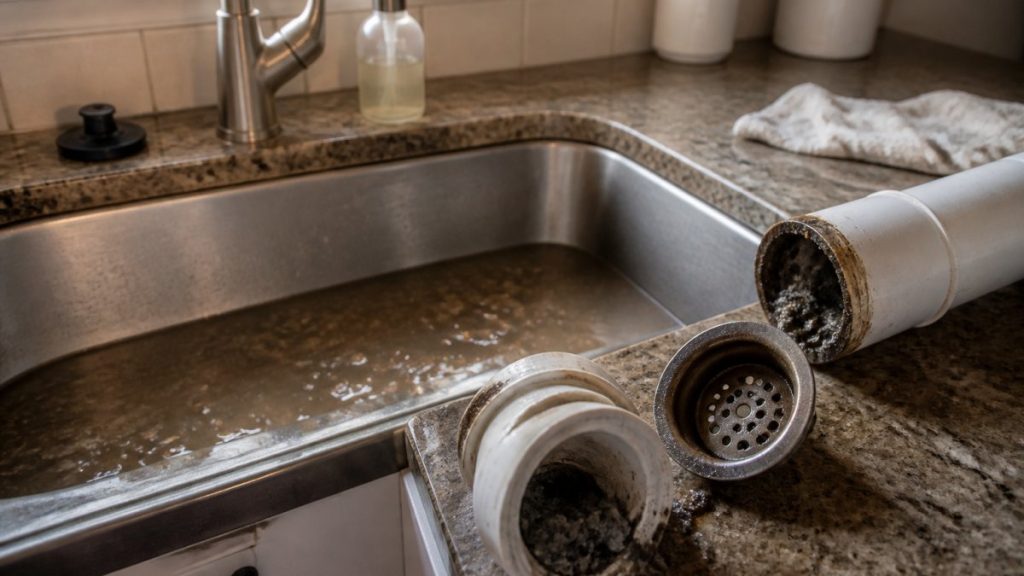
Preventing recurring drain clogs naturally starts with one hard truth: if the same drain backs up every few months, surface cleaning is not the fix for recurring drain clogs. A recurring drain clog can have several possible causes. For a deeper look at stopping the cycle, read how can you stop recurring plumbing clogs for good.
Possible causes include:
- Hair and soap scum packed into a shower trap
- Grease cooling and hardening inside a kitchen line
- Tree roots pushing into a joint
- A pipe that slopes the wrong way, so water pools
- Heavy buildup deeper than any plunger can reach
A slow drain can have more than one possible cause.
How to Prevent Hair From Clogging a Shower Drain
Catching hair before it enters a shower drain is one way to help prevent clogs.
Here are some household steps to consider:
- Brush hair thoroughly before showering to cut what sheds into the drain.
- Fit a hair catcher over the drain and empty it after every wash.
- Rinse with hot water for 30 seconds after each shower.
- Pull visible hair off the drain stopper weekly, not monthly.
- Run a mesh strainer cleaning every two weeks.
Hair buildup near the drain cover may be easier to remove than buildup farther into the drain.
Pick the Right Drain Strainer for Hair and Food
A drain strainer is a screen that fits over or into the drain opening and catches debris before it enters the pipe.
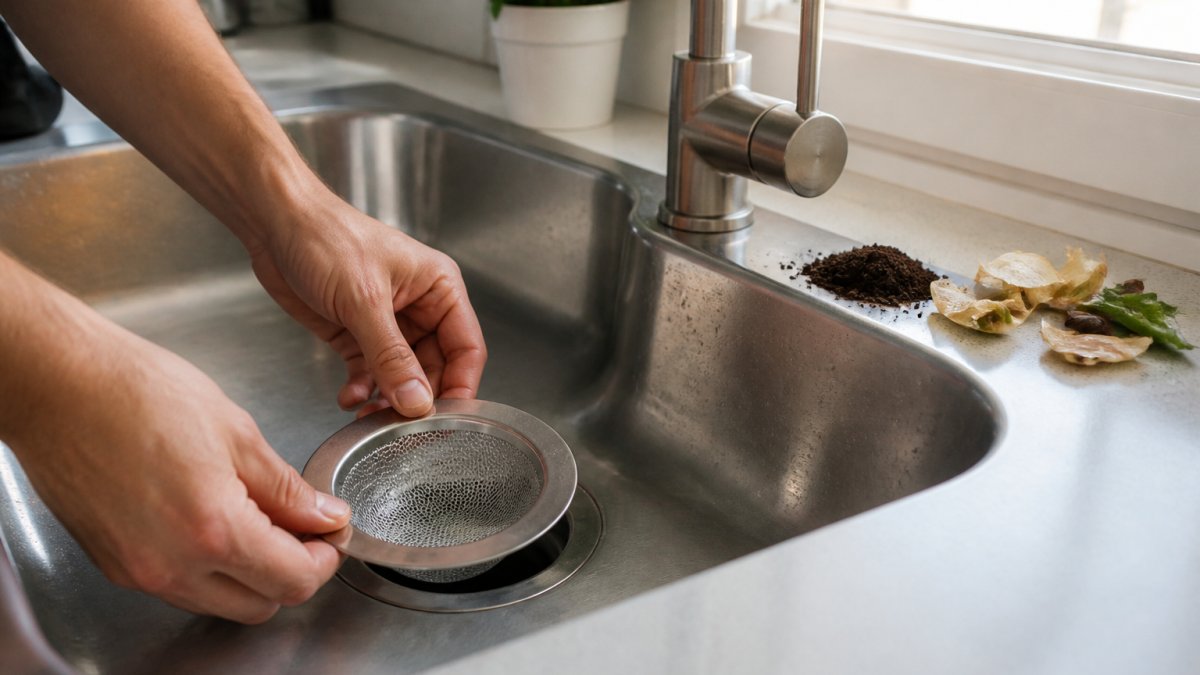
Match the strainer to the room:
| Location | Strainer Type | What It Catches | Cleaning Frequency |
|---|---|---|---|
| Shower drain | Flat hair catcher or basket | Hair, soap scum | Every shower |
| Bathroom sink | Pop-up stopper with screen | Hair, toothpaste residue | Weekly |
| Kitchen sink | Basket strainer | Food scraps, coffee grounds | After each use |
| Tub drain | Over-the-drain screen | Hair, lint | After each bath |
A loose-fitting strainer may let debris slide around the edges. Measure the drain opening before buying.
Baking Soda and Vinegar for Drain Maintenance: What It Can and Can’t Do
Baking soda and vinegar are sometimes suggested for drain care. Here is what to consider.
What the fizz actually does. Baking soda is a mild base and white vinegar is roughly 5% acetic acid. Combined, they neutralize into water, carbon dioxide, and sodium acetate.
What it can realistically fix:
- Slow drainage caused by soap scum or toothpaste film on a bathroom sink or tub
- A faint musty odor from a lightly coated trap
- Routine upkeep between mechanical cleanings
What it cannot fix:
- A hair mat at the shower trap (needs mechanical removal)
- Cooled grease coating a kitchen line (needs hot water and a strainer habit, not fizz)
- A clog caused by roots, a bellied pipe, or a blocked vent
- Anything deeper than the P-trap
Material and temperature cautions.
- Do not follow the mixture with boiling water on older or plastic plumbing. Boiling water can soften PVC joints, stress old solder, and crack a vitreous china trap. Use hot tap water, not boiling, unless you know the pipe material and it is rated for it.
- Septic systems: the mixture itself is harmless to a healthy septic tank, but the flush volume matters more than the chemistry. Do not chase a clog with repeated large flushes; that adds hydraulic load the drainfield does not need.
- Garbage disposals: never pour baking soda and vinegar into a disposal and run it. The foam can pack food residue further down the discharge line. Clean the disposal with ice and citrus peel instead.
- Cast iron and galvanized steel: repeated acid exposure accelerates corrosion on already-thin pipe walls. Use the mixture sparingly, not monthly, on older metal lines.
- Never combine with a commercial chemical drain cleaner, before or after. The reaction can splash or generate heat.
- Pour half a cup of baking soda down the drain.
- Follow with one cup of white vinegar.
- Let it sit 15 to 30 minutes, no longer; it stops working once the reaction ends.
- Flush with hot tap water, not boiling.
For context, the EPA guidance on household plumbing and water use frames drain care as a water-protection habit, not a chemical fix. Treat baking soda and vinegar as gentle upkeep for light film, useful, honest, and limited, not as a rescue tool.
How Often to Clean Household Drains: A Room-by-Room Schedule
How often you clean drains depends on use. The sections after the table explain how to adjust it and how to tell whether it is working.
| Room | Task | Frequency |
|---|---|---|
| Shower | Empty hair catcher | Every shower |
| Shower | Hot water flush | Weekly |
| Bathroom sink | Clear stopper and screen | Weekly |
| Kitchen sink | Empty basket strainer | After each use |
| Kitchen sink | Baking soda and vinegar treatment | Monthly (see cautions above) |
| Toilet | Check for slow flush | Monthly |
| Whole home | Hot water flush of all drains | Monthly |
| Whole home | Deep clean strainers and covers | Seasonally |
Adjust for household load.
Seasonal layer. Add these once a quarter:
- Pull and scrub every strainer and drain cover with a brush and dish soap, film builds on the mesh itself and slows flow even when the pipe is clear.
- Run a hot tap water flush through every drain in the house on the same day, so you compare them under the same conditions.
- Check under sinks for slow seeps or musty smells.
Measure whether prevention is working. Track these indicators per drain:
- Drain speed: time how long a sink or tub takes to clear. Water that clears in seconds is healthy; water that pools and creeps is buildup winning.
- Clog frequency: log every backup with the date and the fixture. Two backups on the same drain within six months is a pattern, not bad luck.
- Strainer load: note how often the hair catcher or basket fills. A strainer that fills faster each month means more debris is reaching the drain, not less.
Keep a one-line log on your phone, date, fixture, what you saw.
When the schedule is not enough. If one drain needs attention more often than the table says, that is your signal. For a deeper walkthrough, see our guide on how often you should clean your clogged drains.
Keeping Grease, Food Scraps, and Wipes Out of the System
Kitchen and bathroom drains can clog for a variety of reasons. Grease, oil, and fat can contribute to kitchen clogs.
Keep these out of every drain:
- Grease, oil, and fat: pour into a container, then trash it
- Food scraps: scrape into the bin, not the disposal
- Coffee grounds: compost or trash, never the sink
- Wipes: trash only, even “flushable” ones
- Dental floss and hygiene products: trash only
The EPA on fats, oils, and grease notes that grease clogs are a leading cause of sewer backups. The garbage disposal is not a trash can. It handles small scraps, not a plate’s worth o